
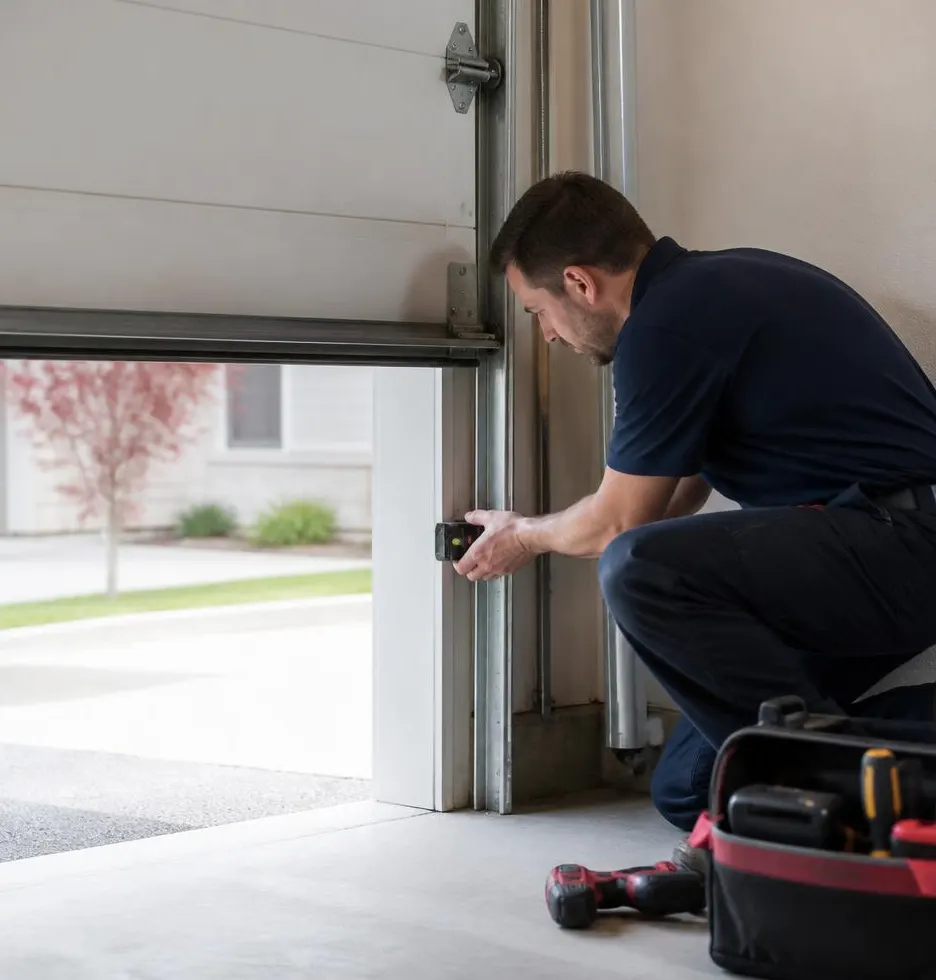
If you only remember one rule, make it this: a belt drive opener is the best default choice for an attached garage in St. Cloud, because it runs quiet enough not to rattle a wall shared with living space, and it shrugs off our humidity better than a bare metal chain does. The exceptions matter, though. A detached garage or workshop where nobody sleeps nearby can save money with a chain drive and never notice the noise. A heavier wind-rated door, common on newer construction in this area, sometimes needs the extra pulling power of a chain or screw unit no matter how loud it is. And some homeowners simply want the fewest possible parts to maintain, which points toward direct drive.
How Each Drive Type Actually Performs
Chain Drive
A metal chain pulls the trailer along the rail, the same basic design these openers have used for decades. It's the loudest option, especially once a door starts to sag slightly out of alignment or the hardware works loose. It's also the cheapest, with units typically running less than belt or direct-drive models before installation. Lifespan is usually 10 to 15 years with regular lubrication, but that chain is bare metal sitting inside a garage that holds heat and moisture for months at a time. It needs lubrication checked more often here than it would in a dry climate, and if your garage ever takes on standing water after a heavy downpour, rust can show up faster than you'd expect.
Belt Drive
A rubber or polyurethane belt replaces the chain, and the difference in noise is immediately noticeable, near silent compared to a chain unit. It costs more up front, but belts don't rust, which is a genuine advantage in humid, salt-tinged air near the lakes around Narcoossee and Harmony. Lifespan runs similar to chain drives, 10 to 15 years, though the belt itself may eventually need replacing before the motor does. Maintenance is low: no chain lubrication, fewer moving parts to inspect.
Screw Drive
A threaded steel rod moves the trailer, so there's no chain and no belt, just the rod and a specific grease that keeps it moving smoothly. Noise falls between chain and belt. The catch here is the grease itself: in sustained Florida heat it can thin out faster than the manufacturer's maintenance schedule assumes, and once it does, the opener gets jerky and louder over time. Screw drives are a reasonable middle ground on price, but they ask for more consistent attention in our climate than a belt drive does.
Direct Drive
The motor itself travels along the rail, there's no separate chain, belt, or screw to wear out. Fewest moving parts means fewest things to rust, loosen, or need lubrication, and it's typically the quietest option available, often matched with strong warranties. It's also usually the priciest up front. For a homeowner who wants to install it once and not think about it again, this is the closest thing to that in garage door openers.
Side-by-Side at a Glance
- Noise: chain loudest, screw moderate, belt and direct drive quietest.
- Upfront cost: chain is typically least expensive, followed by screw, then belt, with direct drive usually costing the most, though horsepower and features like smart connectivity or battery backup affect the price more than drive type alone.
- Lifespan: all four fall in the 10 to 15 year range with regular maintenance; direct drive units often last longest simply because there's less to wear out.
- Climate tolerance: belt and direct drive handle humidity and salt air best since there's no exposed metal chain to rust; chain and screw drives need their lubrication checked more often here than in a drier climate.
What Fits Most Homes in the St. Cloud Area
In the attached garages common across subdivisions in St. Cloud, Buenaventura Lakes, and Poinciana, belt drive is the safe default for most households, especially if the garage shares a wall with a bedroom or living area. For a detached garage or a workshop out in Holopaw or Campbell, a chain drive does the job for less money and the extra noise isn't a factor. For homes closer to the water, where salt-tinged, humid air accelerates corrosion, lean toward belt or direct drive to avoid a chain that rusts faster than it should.
One thing matters more than which drive you choose: if your door was recently replaced to meet wind-load requirements, make sure the opener's horsepower, generally three-quarter horsepower or higher for heavier doors, is actually rated for that door's weight. An underpowered opener will strain and wear out early no matter how well the drive mechanism itself is built. And since afternoon storms and power outages are a regular part of hurricane season here, pairing whichever opener you choose with a battery backup is worth the extra cost, so you're not stuck pulling the manual release cord in the rain.
When to Call St. Cloud Garage Door Experts
If your current opener is grinding, slipping under load, or straining to lift a heavier replacement door, that's a sign to replace it rather than keep patching it. Our Garage Door Opener Installation service matches the unit's horsepower to your door's actual weight and wind rating, and sets up battery backup so storm-season outages don't leave you locked out. If the opener itself is fine but you're not sure what shape the chain, belt, or screw mechanism is in, our Garage Door Maintenance & Tune-Up catches rust, fraying, or thinning grease before it turns into a stuck door on a rainy afternoon.
Call St. Cloud Garage Door Experts for straightforward opener advice and fast service anywhere in St. Cloud, FL and across Osceola County.