
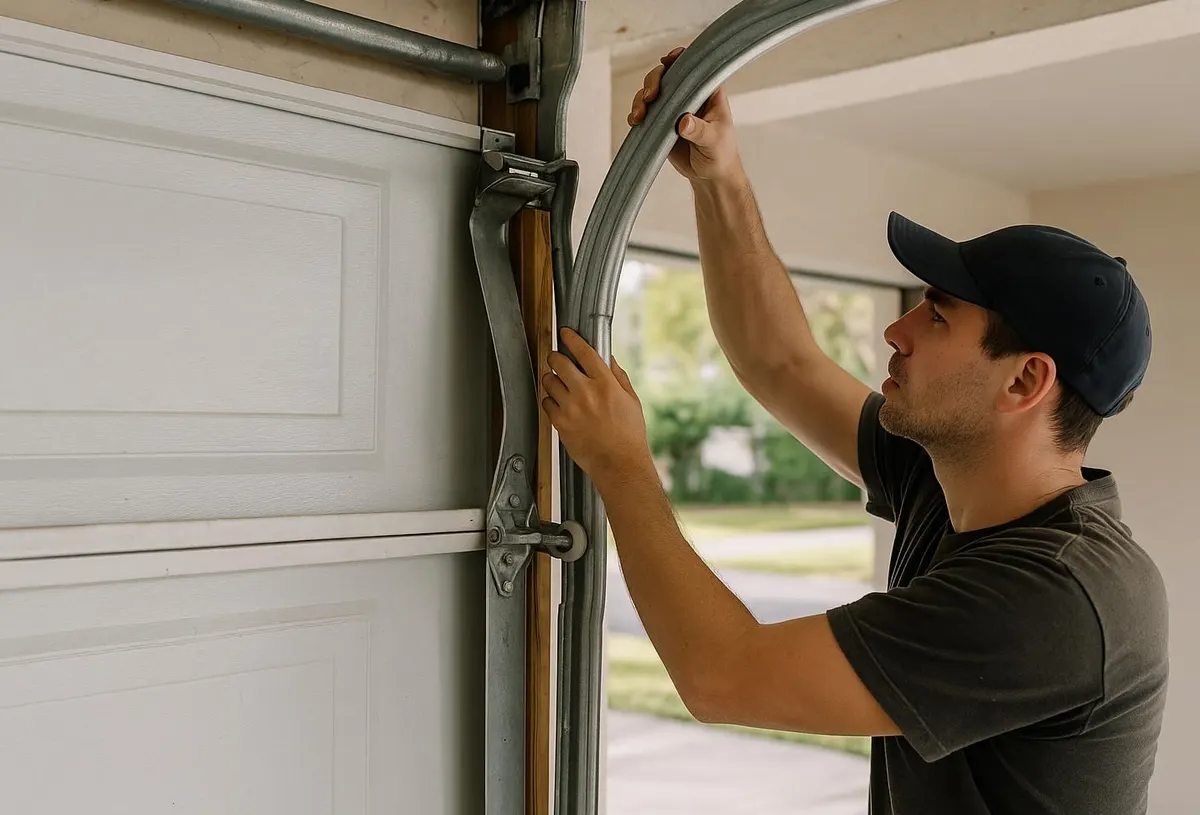
One more hurricane season just rolled through, and that cable you've been meaning to look at is still fraying one strand at a time. Here's what waiting actually costs: a snapped cable can drop a 150-plus-pound door section in under a second, bend the track, crack a panel, and trap a car inside until a tech can get the door back on its rails. The repair that would have cost a fraction of that now includes a service call, parts, and a day you didn't plan to lose. If you and your spouse have been going back and forth about whether that screech is "just the house settling" or something that needs attention this week, here's the plain-language version to settle it.
What a Frayed Cable Actually Looks Like
The cables run from the bottom corners of the door up to the drums near the springs, and they're under constant tension every time the door moves. A healthy cable is tight, evenly wound on the drum, and free of visible damage. A failing one shows:
- Individual wire strands poking out like a broom bristle, usually near the bottom bracket
- Rust spots or discoloration, especially after a wet summer
- Kinks, flat spots, or uneven winding on the drum
- A cable that looks slightly loose or slack compared to the one on the other side
Humidity and the salt-tinged air drifting inland from the coast both speed up corrosion on steel cable. A cable that would last years in a dry climate can show rust and fraying noticeably sooner here, especially on doors that face prevailing wind and rain.
What Worn Rollers Sound and Feel Like
Rollers guide the door along the track. When they wear out, the symptoms show up before the failure does:
- A grinding or rumbling sound that gets louder as the door moves
- Jerky, uneven travel instead of one smooth motion
- Visible flat spots on nylon rollers or flaking and pitting on steel ones
- The door wobbling side to side instead of staying flush in the track
Nylon rollers are quieter but can crack under heat and UV exposure over time. Steel rollers are tougher but rust faster in humid air, especially if the bearings aren't sealed.
Why These Two Problems Feed Each Other
This is the part that settles most arguments: worn rollers and frayed cables aren't separate issues, they're connected. When rollers wear unevenly, the door doesn't travel straight in the track. That forces the cables to pull at a slight angle instead of a clean, straight line, which adds friction and stress exactly where cables are already weakest, near the bottom bracket and the drum. A door with rough rollers will wear out its cables faster than one that rides smoothly. Fix only the noisy roller and ignore the fraying cable, and you've patched the symptom while the real failure point keeps getting worse.
The Argument, Settled
One side of the argument: "It's just a sound, the door still opens fine." The other side: "If it's making noise, something's already wearing out." The second position is closer to correct. By the time a cable or roller is loud or visibly worn, it has usually been degrading for months. The door working fine today doesn't mean it will work fine tomorrow, especially heading into the wetter, stormier stretch of the year when the door gets used more for quick in-and-out trips between downpours and sits exposed to swings in humidity that make panels swell and brackets shift slightly.
What Happens If This Waits Another Season
A frayed cable doesn't usually give a warning before it snaps; it just goes, often when the door is partway open or closed. When that happens with worn rollers already straining the system, the door can come off the track entirely, which means a bent track, a cracked panel, or a door that won't move in either direction until it's repaired. If that happens during a storm when you need the door operating normally for safety and property protection, it's a worse time to discover the problem than right now, on a calm afternoon, with time to actually fix it.
What You Can Safely Check Yourself
A few checks don't require any tools or risk:
- Open and close the door while watching the cables near the bottom brackets for fraying, rust, or slack
- Listen for grinding versus a smooth hum as the door travels
- Look at the rollers where they sit in the track for visible wear, flat spots, or rust
- Check that the door travels straight instead of leaning or wobbling
What not to do: don't touch the cables directly, don't try to adjust drum winding, and don't attempt to loosen or tighten anything connected to the torsion springs. Those parts are under heavy tension and are a job for someone with the right tools and training.
When to Call St. Cloud Garage Door Experts
If you're seeing fraying, rust, grinding, or a door that doesn't ride smooth and straight, that's the point to call rather than wait. We handle Garage Door Cable Repair and Garage Door Maintenance & Tune-Ups for homeowners throughout St. Cloud, Kissimmee, Narcoossee, and the surrounding Osceola County communities. A tune-up catches worn rollers and early cable wear before they turn into an off-track door or a stuck panel, and it's a lot cheaper than an emergency call after something fails.
If that noisy door has been the subject of a standing disagreement at your house, let us settle it. Call St. Cloud Garage Door Experts for a straightforward inspection, and we'll tell you exactly what's worn, what's fine, and what it'll take to fix it right.