
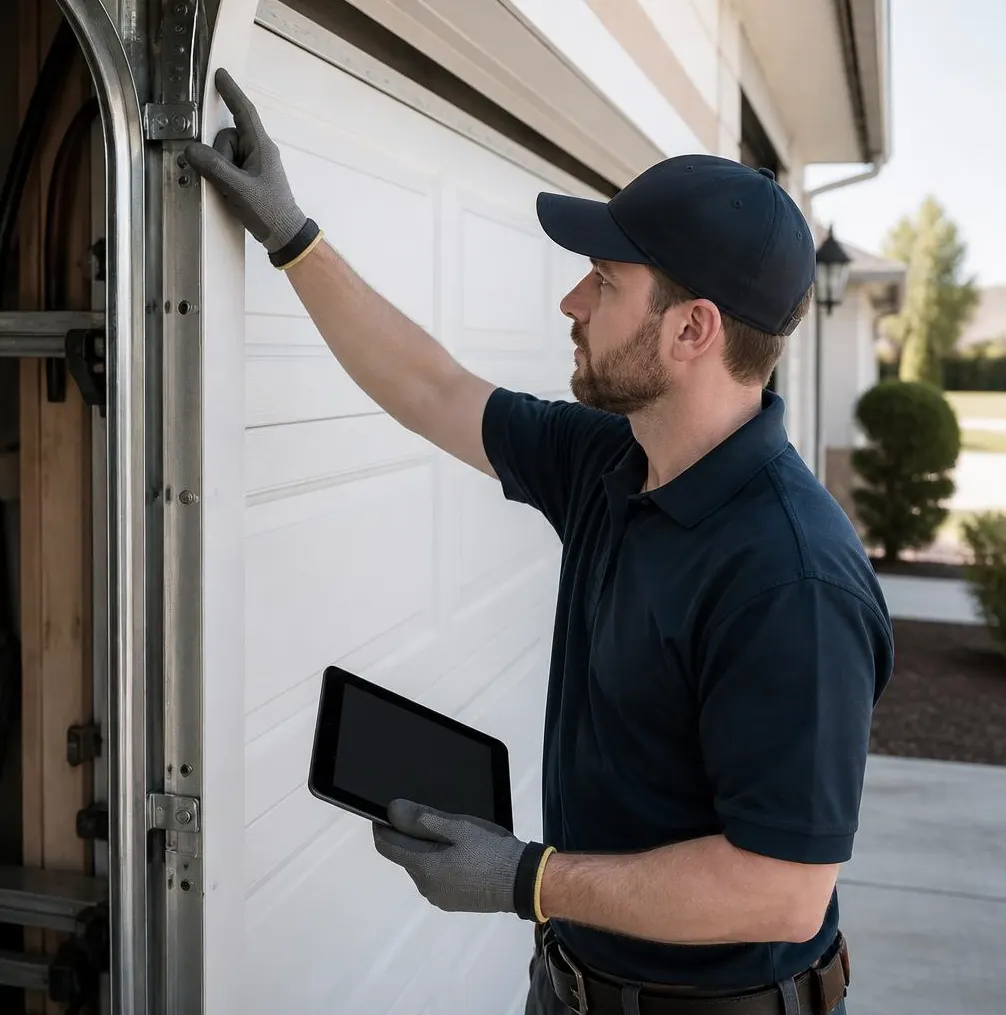
What a Technician Sees on This Call
The call usually starts the same way: "My garage door won't close. It goes down a few inches, stops, then goes right back up." The homeowner has already checked the remote, tried the wall button, maybe tapped the opener a few times. By the time a technician gets there, they're pointing a flashlight at two small plastic boxes mounted a few inches off the garage floor, one on each side of the track, wondering why something so small is holding the whole system hostage.
Those boxes are the photo-eye safety sensors. One sends an invisible infrared beam across the garage floor, the other receives it. As long as that beam is unbroken, the opener knows it's safe to close. Break the beam, misalign the sensors, or dirty up the lenses enough, and the opener refuses to close the door or reverses it mid-cycle. It's doing exactly what it's supposed to do, just not for the reason the homeowner expects.
Why Photo-Eye Sensors Trip in This Climate
In St. Cloud and the surrounding Osceola County area, a few local conditions make sensor problems more common than homeowners expect:
- Humidity and condensation. Thick, humid air common to this part of Florida can leave a light film of moisture on the sensor lenses, especially overnight or after a sudden temperature drop. That film scatters the infrared beam just enough to cause intermittent reversals.
- Afternoon downpours and splashback. Heavy summer and early fall storms kick up water and grit along the garage floor. Even after the rain stops, dried mineral residue or mud spatter on a lens can weaken the signal.
- Lawn care and yard debris. Grass clippings, mower dust, and leaf debris settle on sensor housings low to the ground. A sensor that worked fine last week can get knocked off alignment by a trimmer, a stored bike, or a kid's bicycle handlebar.
- Direct sun angle. As the sun sits lower in the sky in October and into winter, some garages get a brief window each afternoon where direct sunlight hits the receiving sensor almost head-on. That glare can overpower the infrared beam and cause the door to refuse to close at the same time every day.
- Spiders and insects. Warm, humid garages attract webs and small insects that build up on the lens or even inside the housing if the gasket has cracked from age and heat cycling.
- Vibration and settling. Homes built on sandy or shifting soil, along with routine door use, can gradually knock the sensor brackets out of true alignment over months, even without anyone touching them.
How to Clean and Align Photo-Eye Sensors
Before assuming a sensor is broken, walk through this sequence. It solves the majority of nuisance reversals without a service call.
- Check the LED indicators. Most sensors have a small light on each unit. A solid, steady light on both sides usually means a clean connection. A flickering or dim light on one side points to an alignment or power problem.
- Look for anything blocking the beam. A storage bin, a broom leaning in the wrong spot, even a stray leaf can sit directly in the beam path. Clear the floor between the two sensors fully.
- Wipe the lenses gently. Use a soft, dry microfiber cloth, not a paper towel, which can scratch the lens. A light pass is usually enough; avoid glass cleaner unless you dry it completely afterward, since residue can refract the beam.
- Loosen and realign the brackets. Most sensors mount with a wing nut or thumbscrew. Loosen it slightly, gently move the sensor up, down, or side to side while watching the indicator light, and tighten once the light goes solid on both units.
- Use a level for a permanent fix. If one sensor has drifted noticeably lower or higher than the other, use a small level against the bracket to get both sensors at the same height before tightening fully.
- Test in different light conditions. If the issue only shows up at a certain time of day, try closing the door at that time after cleaning and aligning. If it still fails, a small piece of cardboard taped above the receiving sensor as a temporary sun shield can confirm glare is the cause.
If the sensors are clean, aligned, and the LED still won't go solid, the wiring itself may be damaged, often from moisture intrusion or rodents chewing insulation in an unconditioned garage. That's a repair, not a cleaning job.
Why You Should Never Bypass the Sensors
Some older openers allow the sensors to be unplugged or wired around entirely, and a frustrated homeowner under time pressure can be tempted to do it just to get the door moving again. Don't. Without a working photo-eye, the opener has no way to detect a child, pet, bicycle, or trash can in the door's path. A door that reverses on contact with a solid object will not reverse in time to avoid injury, since that only works with physical pressure against the bottom edge, not the beam itself. Bypassing the sensor turns a modern safety feature back into a decades-old hazard, and it's also often a liability issue for homeowners who rent out or sell the property later, since a disabled safety sensor can surface during inspection.
When to Call St. Cloud Garage Door Experts
If you've cleaned and realigned the sensors and the door still won't close reliably, or if you notice scorched wiring, a cracked sensor housing, or corrosion from humidity inside the unit, it's time to bring in a technician. St. Cloud Garage Door Experts handles sensor wiring repair and replacement as part of routine Garage Door Maintenance & Tune-Up visits, and if the issue turns out to be a bent track or misaligned rail pushing the sensor bracket out of position, that falls under Off Track Door Repair. Either way, a tech can diagnose in minutes whether you're dealing with dirt, glare, wiring, or a structural issue.
If your garage door in St. Cloud, FL is reversing, refusing to close, or acting inconsistent with the weather, call St. Cloud Garage Door Experts for a fast, local inspection and get it fixed right the first time.