
The Mistake Almost Everyone Makes First
A spring snaps, the door won't budge, and the first instinct is to search for a single number: "how much does a garage door spring cost." Homeowners land on a price for the part alone — sometimes under $30 — and anchor to that figure. Then the actual quote comes back three, four, even ten times higher, and it feels like a bait-and-switch.
It isn't, usually. The part price and the job price are two different things, and the mistake is tempting because a torsion spring really is a small, cheap-looking piece of metal. What it doesn't show you is the labor, the matching pair, the correct wire gauge and cycle rating for your specific door, the safety precautions, and often a second spring that's about to fail right behind the first one. Knowing the real cost ranges and what drives them up or down lets you read a quote instead of just reacting to it.
National Price Ranges (Not Local Quotes)
These are general ranges reported across the industry, not prices specific to St. Cloud. Always get a written, itemized quote for your actual door.
- Single torsion spring replacement: roughly $150–$350 including parts and labor
- Both torsion springs replaced as a pair: roughly $250–$550
- Extension spring replacement (pair): roughly $100–$300, generally cheaper than torsion setups
- High-cycle or heavy-duty springs: add roughly $50–$150 over standard-cycle springs
- Cables replaced at the same time: often $20–$75 per cable as an add-on
- Emergency or same-day/weekend service: often a $50–$100 premium over scheduled service
What Actually Moves the Price
Spring Type
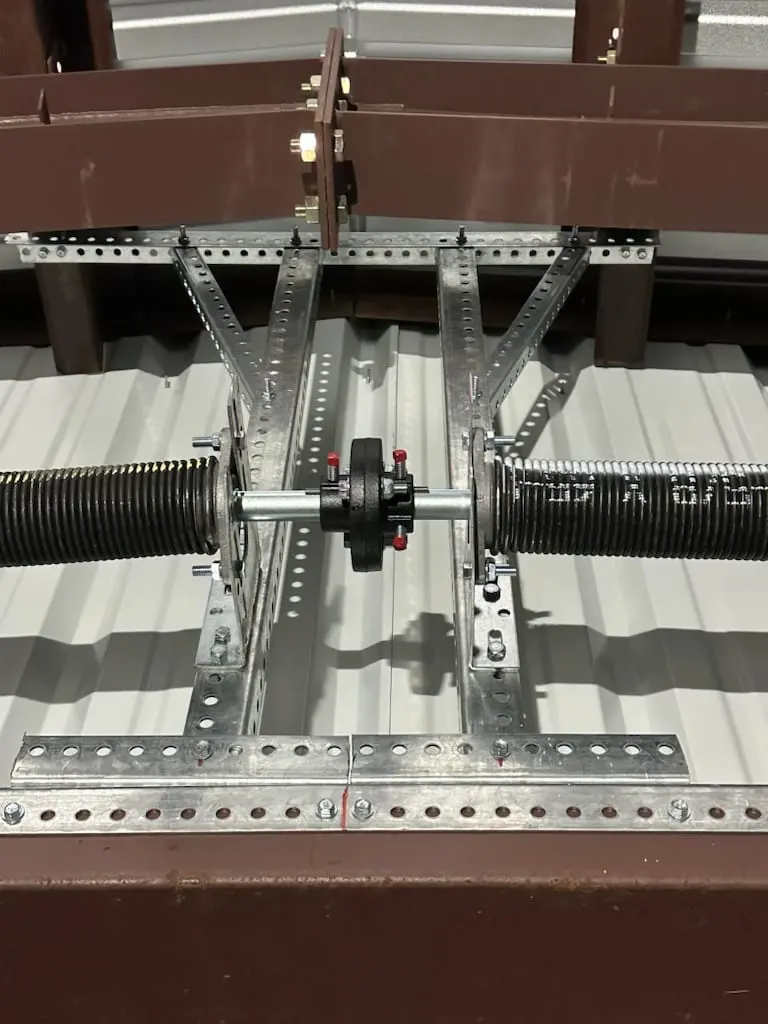
Torsion springs (mounted on a shaft above the door) are more common on modern doors and generally cost more to replace than extension springs (mounted along the upper tracks), partly because torsion systems require more precise tensioning and specialized tools.
One Spring or Two
If your door has two torsion springs, most reputable technicians will recommend replacing both at the same time, even if only one broke. Springs wear down together, and the second one is usually close behind. Replacing just one saves money up front but often means paying for a second service call within months.
Door Weight and Size
A heavier door — double-wide, insulated steel, or a carriage-style door with added hardware — needs a stronger spring to balance it. Stronger springs cost more, and doors with wind-rated or reinforced components (common on newer installs in storm-prone areas) often pair with heavier-duty springs by design.
Cycle Rating
Springs are rated by how many open-close cycles they're built to handle before wearing out — standard options are often rated around 10,000 cycles, while high-cycle springs can be rated 20,000 to 100,000+. In a climate where afternoon storms and heat push people to use the garage door more often for quick shelter, and where humidity and temperature swings add stress to metal components, a higher cycle rating can be worth the upcharge even though it raises the quote.
Condition of Other Hardware
A snapped spring under tension can damage cables, bend a drum, or throw a door off its track on the way down. If cables are frayed or a drum is cracked, replacing them alongside the spring adds cost now but avoids a return visit.
Access and Door Configuration
High ceilings, vaulted garages, or doors with special low-headroom or high-lift track setups can add labor time, which shows up in the final price.
Timing
A spring that breaks on a Sunday evening or during a storm, when the door is stuck shut and you need it open, typically costs more than scheduling a repair during normal business hours.
What a Fair Quote Should Include
Before agreeing to a price, ask the technician to put these in writing:
- Whether one spring or both are being replaced, and why
- The spring's wire gauge and cycle rating, matched to your door's weight
- Whether cables, rollers, or bearings were inspected and whether they're included or extra
- Parts and labor warranty terms, in writing
- Any trip, diagnostic, or emergency fee, disclosed before work starts, not added afterward
A quote that's just one lump number with no breakdown makes it hard to know what you're actually paying for — or to compare it against a second opinion.
Why Springs Fail Faster in This Climate
Heat, humidity, and salt air (for homes closer to the coast) all accelerate rust and metal fatigue. Rust on a torsion spring's coils isn't just cosmetic — it weakens the metal and can cause an early, sudden break instead of a slow decline you'd notice in advance. Swelling door panels from moisture can also throw extra strain on springs that are working to balance a door that no longer moves quite as freely as it used to. Regular tune-ups that catch rust and misalignment early are one of the few ways to actually get ahead of a spring failure instead of reacting to one.
When to Call St. Cloud Garage Door Experts
If a spring has already broken, don't try to force the door open — the tension involved makes this one of the few garage door repairs that's genuinely unsafe for most homeowners to handle alone. Our Garage Door Spring Repair service includes a full inspection of the opposite spring, the cables, and the drums, so you get one visit instead of two. If your springs are intact but aging or showing surface rust, our Garage Door Maintenance & Tune-Up service catches wear before it turns into a Sunday-evening emergency.
If you're in St. Cloud, Kissimmee, Narcoossee, Harmony, Holopaw, Buenaventura Lakes, Poinciana, or Campbell and need a straight answer on what a spring repair will actually cost for your door, call St. Cloud Garage Door Experts for a written quote and fast, honest service.